

Envision your passport as a key, sometimes unexpectedly barred from accessing new journeys. In the UAE, travel bans can silently block your plans, often tied to legal or financial matters you might not know about. Knowing how to check your status isn’t just smart—it’s essential. With official digital tools and clear steps, you can uncover any restrictions before they catch you off guard. Let’s explore the precise methods that keep your travel freedom intact.
Understanding Travel Bans in the UAE
A travel ban in the UAE is a legal order affecting your ability to enter or leave the country until specific issues are resolved.
What is a Travel Ban in the UAE? – A brief introduction
A travel ban in the UAE is a legal restriction preventing entry or exit, often linked to issues like debts or legal cases. It varies in type and authority.
Types of Travel Bans and Why They Are Imposed
While travel bans in the UAE may appear to be a singular restriction, they are categorized into several specific types, each associated with distinct legal or administrative reasons. Residents may encounter the following travel bans:
- Financial Ban: This type arises from unpaid debts and is often enforced through local banks or financial institutions. Individuals can check the status of such bans through the Al Etihad Credit Bureau.
- Immigration Ban: Imposed due to visa violations, such as overstaying a visa or failing to adhere to residency regulations set by the General Directorate of Residency and Foreigners Affairs (GDRFA), this ban can prevent re-entry into the UAE.
- Labor Ban: Linked to employment issues, this ban can result from disputes with employers or failure to comply with labor laws dictated by the Ministry of Human Resources and Emiratisation (MOHRE). Individuals should consult MOHRE for guidance on resolving such matters.
- Criminal Ban: This type is enforced when individuals are involved in legal offenses, and it is essential to address any legal issues with the relevant authorities, such as the Dubai Police, to lift the ban.
Understanding these categories allows residents to identify and address the underlying issues promptly, ensuring compliance with UAE regulations and facilitating smoother travel plans.
Financial Ban – Related to debts, loans, or bounced cheques
Understanding the implications of financial obligations in Dubai is crucial for residents and business owners alike, particularly concerning travel bans related to debts, loans, or bounced cheques. When an individual fails to settle debts or a cheque bounces, the Dubai courts, specifically through the Dubai Police and the Public Prosecution, may impose a travel ban. This legal measure is enforced to ensure that individuals address their financial responsibilities before accessing international travel, thereby upholding accountability within the financial system.
To navigate these restrictions effectively, individuals should first ensure all debts are settled promptly. Step 1: Review your financial obligations, including any outstanding loans or personal debts. Step 2: Make arrangements with creditors or financial institutions, such as Emirates NBD or Abu Dhabi Commercial Bank, to discuss repayment plans. Step 3: If a cheque has bounced, immediately contact your bank—whether it’s Dubai Islamic Bank or HSBC—to resolve the issue and prevent further legal action.
Understanding the travel ban process is equally important. If a travel ban is imposed, individuals can check their status via the Dubai Police website or through the UAE’s Ministry of Interior app. Resolving outstanding debts swiftly can help lift a travel ban, allowing for smoother travel plans. In summary, maintaining good financial health is not just a personal responsibility but a legal necessity for anyone living or conducting business in Dubai.
Immigration Ban – Linked to residency or visa violations
When residents in the UAE fail to adhere to visa conditions or residency regulations, an immigration ban may be imposed, significantly restricting travel options and affecting one’s ability to enter or exit the country. This often arises from specific actions, including:
- Visa Overstays: Exceeding the duration of stay granted by your visa is a primary cause. For instance, the UAE’s General Directorate of Residency and Foreigners Affairs (GDRFA) enforces penalties for overstaying, which can lead to a travel ban.
- Absconding Reports: If a sponsor files an absconding report with the GDRFA, it can result in immediate restrictions. This typically occurs when a foreign worker leaves their job without notifying their employer.
- Incomplete Visa Cancellations: Failing to complete the necessary procedures for visa cancellation can lead to an immigration ban. Residents must ensure that they follow through with the cancellation process through the appropriate channels, such as the Ministry of Human Resources and Emiratisation (MoHRE) or GDRFA.
- Discrepancies in Residency Documents: Inconsistencies in submitted residency paperwork can trigger an investigation and subsequent ban. It is crucial for residents to maintain accurate and updated documentation, including Emirates IDs and residency permits.
Being aware of these factors allows residents to navigate the regulatory landscape effectively and mitigate the risk of travel disruptions. For those facing potential bans, consulting with legal experts or the relevant authorities can provide pathways to resolve issues promptly.
Labor Ban – Imposed by the Ministry of Human Resources & Emiratisation
A labor ban in the UAE, enforced by the Ministry of Human Resources & Emiratisation, significantly impacts your employment prospects and legal residency status. While it is not a direct travel restriction, it inhibits your ability to secure new employment within a specified timeframe, typically ranging from six months to one year.
To navigate this situation effectively, consider the following steps:
Step 1: Check Your Status
Begin by verifying if a labor ban has been imposed on your residency visa. You can do this through the Ministry of Human Resources & Emiratisation’s official website or by visiting their service centers located throughout Dubai.
Step 2: Understand the Implications
Without a new sponsor during the ban period, your residency visa may be canceled, which could jeopardize your legal status in the UAE. This cancellation could limit your ability to travel freely within and outside Dubai.
Step 3: Explore Alternative Sponsorship Options
If you find yourself under a labor ban, investigate alternative sponsorship avenues. Some expatriates opt for freelance work permits or explore opportunities with free zone companies, where the labor ban may not apply.
Step 4: Plan Your Next Steps
Develop a strategy for securing employment post-ban. This might include networking within Dubai’s job market, updating your CV, and leveraging platforms like LinkedIn to connect with potential employers.
Criminal Ban – Resulting from legal or police cases
A criminal ban in Dubai is a legal restriction placed on individuals involved in police investigations or court proceedings, preventing them from exiting the UAE until the matter is fully resolved. This ban can stem from various legal circumstances, including:
- Police Investigations or Pending Court Cases: If you are under investigation or have an active court case, authorities such as the Dubai Police or the Public Prosecution may issue a travel ban.
- Traffic Violations: Serious traffic offenses, including reckless driving or repeated violations, can lead to legal action that may result in a criminal ban.
- Serious Criminal Charges or Convictions: Involvement in serious crimes, such as theft or assault, may lead to a travel restriction while the case is adjudicated.
- Bounced Cheques: In Dubai, writing a cheque that bounces is treated as a criminal offense. Consequently, individuals may face a travel ban until the matter is resolved with the concerned bank or legal authority.
Understanding the implications of these bans is crucial for residents. If facing any of these situations, it is advisable to consult with legal professionals in Dubai to navigate the complexities of local laws effectively. Establishing communication with the relevant authorities, such as the Dubai Courts or Dubai Police, can provide clarity on the steps needed to resolve any outstanding issues and lift the ban.
Other Bans – Security-Related Restrictions
Other Bans – Security-Related Restrictions in Dubai
In Dubai, security-related travel bans are often implemented with a focus on national safety and public security. These restrictions are typically not publicized due to the sensitive nature of the issues involved, which may include intelligence concerns or ongoing investigations by local authorities such as the Dubai Police or the UAE Federal Authority for Identity and Citizenship.
If you encounter a security-related travel ban, official information may be scarce, as the authorities prioritize confidentiality to safeguard their operations. Unlike financial or criminal restrictions, resolving these bans often requires direct engagement with specialized government bodies. Residents should be prepared to navigate complex procedures, which may involve obtaining security clearances or consulting legal professionals experienced in dealing with such sensitive matters.
Understanding the rationale behind these measures can help residents approach the situation with patience. It is essential to seek expert advice from local legal counsel or immigration consultants who are familiar with the nuances of security protocols in the UAE. This ensures that your rights are upheld while adhering to the necessary regulations. For those in Dubai, organizations such as the Dubai Legal Affairs Department can provide resources and guidance on navigating these issues effectively.
How to Check Your Travel Ban Status (Official Methods)
You can easily check your travel ban status through official channels suited to your needs. Consider using online services or seeking in-person assistance for quick clarification.
Check Travel Ban via the Dubai Police Website – Step-by-step guide
To determine if a travel ban affects you while residing in Dubai, the Dubai Police website serves as a reliable and efficient resource for accessing this critical information. With just your Emirates ID and a UAE Pass login, you can quickly verify your status. Follow these steps for a thorough check:
Step 1: Access the Dubai Police Website
Begin by visiting the official Dubai Police website. Ensure you have your UAE Pass ready for logging in.
Step 2: Navigate to the Relevant Services
Once logged in, head to the “Services” section. From there, select either “Circulars and Travel Ban” or “Criminal Status of Financial Cases,” depending on your specific inquiry.
Step 3: Enter Your Emirates ID
Input your Emirates ID number in the designated field when prompted. This identifier is crucial for fetching your personal data.
Step 4: Review Your Results
Carefully examine the information displayed to ascertain whether any travel bans are currently active against you.
This streamlined process ensures that you receive accurate, up-to-date information directly from Dubai’s official authorities. By following these steps, residents can manage their travel plans effectively, mitigating the risk of unexpected disruptions.
Check Travel Ban via the Dubai Police App – App-specific instructions
Checking your travel ban status in Dubai has become significantly more streamlined with the Dubai Police app, a crucial tool for both residents and visitors. To begin, download the Dubai Police app from the official platforms and install it on your smartphone. Once installed, log in using your UAE Pass for secure authentication, ensuring a swift entry into the app’s features.
Next, navigate to the “Services” menu, where you will find options such as “Circulars and Travel Ban” and “Criminal Status of Financial Cases.” It is essential to accurately input your Emirates ID number in the designated field to access precise and relevant results regarding your legal standing. The app provides immediate visibility of any active travel bans related to financial disputes or criminal cases within Dubai’s jurisdiction, which is managed by the Dubai Police General Headquarters (GHQ).
Utilizing the Dubai Police app not only saves time by eliminating the need for a physical visit to a police station but also offers reliable, real-time updates on your legal status. This proactive approach is vital for avoiding unexpected travel disruptions, ensuring that you remain informed of any potential issues that might affect your travel plans. By leveraging this digital service, residents can navigate Dubai’s legal landscape with greater confidence and ease.
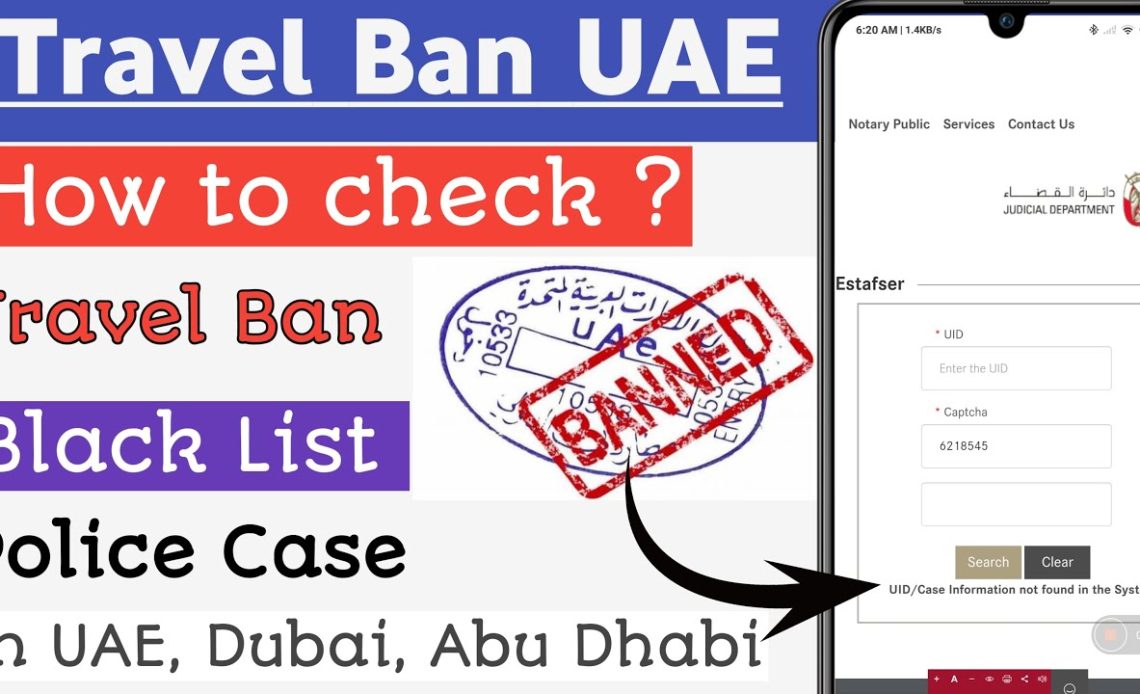
Check Travel Ban via the MOJ’s ‘Estafser’ Service – For federal-level/criminal checks
The Estafser service, managed by the Ministry of Justice (MOJ), is an invaluable resource for Dubai residents who need to verify federal-level travel bans and the status of criminal cases in the UAE. This official platform allows users to efficiently check for any court-ordered restrictions that may affect their travel plans. Here’s a clear, step-by-step guide on how to utilize the Estafser service:
- Access the Official Portal: Start by visiting the Abu Dhabi Judicial Department (ADJD) website or download their mobile application for easy access.
- Locate the Service: Navigate to the “Estafser” inquiry service, which can be found under the eServices section of the website or app.
- Input Your Information: Enter your Unified Identification Number (UID), which is located on your residency visa. This unique identifier is crucial for retrieving your specific legal status.
- Review Results: After submitting your UID, carefully review the displayed results for any active travel bans or details about ongoing criminal cases that may pertain to you.
Using the Estafser service ensures that you obtain reliable federal-level information, which is essential for avoiding unexpected complications during your travel. By staying informed about your legal standing, Dubai residents can make well-informed decisions and plan their travels without fear of legal entanglements.
Alternative Method: Inquiry at a Police Station or Amer Center – For direct assistance
If you find yourself uncertain about your travel ban status in Dubai, the Estafser service or other online portals may not provide the clarity you need. To obtain definitive answers, visiting a police station or an Amer Center is a recommended alternative.
Step 1: Prepare Your Documents
Before heading out, ensure you have your passport and Emirates ID on hand. These documents are essential for verification purposes.
Step 2: Locate a Police Service Center or Amer Center
You can visit any Dubai Police service center or a licensed Amer Center. Dubai Police service centers are strategically located throughout the city, such as the Al Qusais and Al Barsha locations, while Amer Centers are available in various neighborhoods, including Jumeirah and Dubai Marina.
Step 3: Inquire about Travel Bans
At the center, trained staff can access comprehensive databases to check for any active travel bans associated with your identity. This direct interaction often yields more accurate information than online systems, which may sometimes reflect outdated or conflicting data.
Caution:
It is crucial to be aware of your legal status before visiting a police station. If a criminal arrest warrant exists against you, approaching law enforcement could lead to detention.
Utilizing this method ensures you receive official and up-to-date information from the authorities. This proactive step can provide peace of mind and a clear pathway for addressing any travel-related issues you may encounter.
What to Do If You Have a Travel Ban?
If you discover a travel ban, stay calm and contact the issuing authority immediately to clarify the situation and explore resolution options.
Immediate Steps to Take – Contact Authorities
Upon discovering that a travel ban impacts your ability to move freely in Dubai, it is crucial to act promptly and efficiently by contacting the relevant authorities. Immediate response is essential to expedite the resolution and prevent potential legal complications. Here are the essential steps to follow:
Step 1: Identify the Source of the Ban
Understanding whether the travel ban is related to financial, immigration, or criminal issues is critical. Each type of ban has a different set of procedures for resolution.
Step 2: Contact the Relevant Authority
Reach out directly to the issuing authority. For instance, if the ban is criminal in nature, contacting the Dubai Police is advisable. For immigration-related bans, the General Directorate of Residency and Foreigners Affairs (GDRFA) should be your first point of contact. If financial, approach your bank to clarify any imposed restrictions.
Step 3: Utilize Official Resources
Visit official websites or service centers equipped with your Emirates ID and passport for a more direct inquiry. The GDRFA website offers detailed information about residency issues, while the Dubai Police portal can provide updates on criminal cases.
Step 4: Seek Legal Assistance
If the situation is complex, consider hiring a UAE-licensed lawyer who specializes in travel bans and local laws. A legal expert can help navigate the nuances of your situation and communicate effectively with officials on your behalf.
Step 5: Prepare Your Documentation
Gather all relevant documents that support your case, such as your residency visa, Emirates ID, and any correspondence related to the ban. Having these on hand will help streamline the process and support your efforts in resolving the issue.
How to Resolve or Lift a Travel Ban?
Resolving or lifting a travel ban in the UAE requires a comprehensive understanding of the specific type of ban you are encountering, as well as the legal procedures necessary to address it. In Dubai, travel bans can be categorized into four main types: financial, immigration, labor, and criminal.
For financial bans, such as those imposed due to unpaid debts, it is crucial to settle any outstanding amounts as per the court’s judgment. Once the debts are cleared, obtaining a payment confirmation from the involved financial institution typically leads to an automatic lifting of the ban. Residents can consult with entities like the Dubai Courts for guidance on the payment process.
Immigration-related bans often stem from visa issues or fines. To resolve these, individuals must pay the outstanding fines or rectify any visa discrepancies, such as canceling an absconding report with the General Directorate of Residency and Foreigners Affairs (GDRFA). Step 1 involves identifying the exact nature of the visa issue, followed by Step 2, which is addressing any fines through the GDRFA’s online portal.
Labor bans, which may arise from employment disputes, require obtaining a “no objection” letter from your former employer, or applying for a waiver through the Ministry of Human Resources and Emiratisation (MOHRE). To initiate this process, Step 1 is to contact your previous employer to request the letter, and Step 2 is to submit the waiver application through the MOHRE website.
Criminal bans necessitate legal resolution, often involving the payment of fines or obtaining clearance from the courts. Residents facing a criminal ban should first consult with a legal expert, preferably one familiar with the Dubai judicial system, to understand the specific steps involved, which may include securing a court clearance certificate.
Throughout this process, engaging with a seasoned UAE lawyer can significantly expedite the resolution of any travel bans, ensuring that residents can regain their travel freedom in an efficient manner.
Final Checklist Before Travel
Before embarking on your journey from Dubai, it’s imperative to conduct a thorough review of your travel checklist to avert unforeseen complications. With travel bans occasionally affecting departures from the UAE, confirming your travel status is crucial. Here’s a step-by-step guide to ensure you’re fully prepared:
- Check for Travel Bans: Verify the absence of any active travel bans by consulting the official UAE government portals, such as the Federal Authority for Identity and Citizenship (ICA) or the UAE Ministry of Foreign Affairs and International Cooperation. This step is essential as restrictions can change rapidly.
- Visa and Residency Validation: Confirm that your visa and residency permits are valid. Visit the General Directorate of Residency and Foreigners Affairs (GDRFA) website or their service centers to check for any cancellations or violations that might hinder your travel.
- Settle Financial Obligations: Ensure that all financial responsibilities, including outstanding fines or debts, are cleared. This precaution prevents legal holds that could arise from unpaid obligations registered with local authorities such as the Dubai Police or the Dubai Courts.
- Gather Essential Travel Documents: Assemble all vital documents required for travel. This includes your Emirates ID, passport, and any relevant correspondence from courts or banks. It’s advisable to keep both physical and digital copies of these documents accessible.