

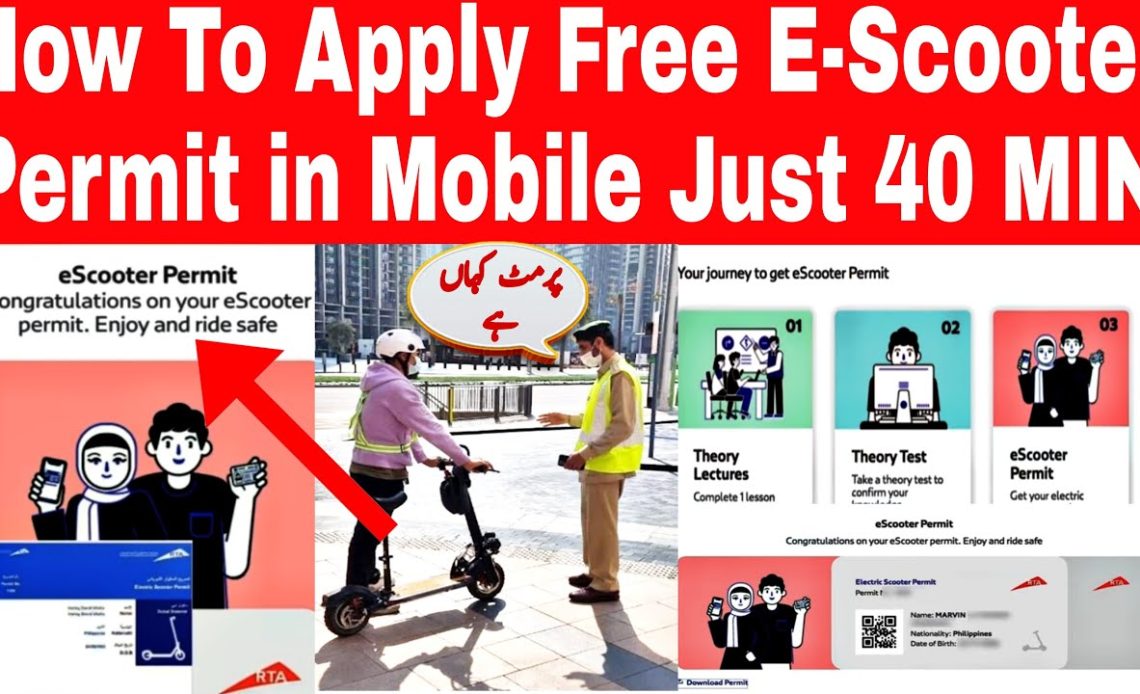
If you’re enthusiastic to zip around the UAE on an e-scooter, knowing how to get your license is essential. The process is designed to be clear and accessible, letting you register online, complete basic safety training, and receive your digital permit quickly. But there’s more to riding responsibly here than just having a license—understanding the rules and where you can safely ride will shape your experience. Let’s explore what you need to get started and stay safe on your e-scooter journey.
Eligibility & Getting Your Permit
To ride an e-scooter in Dubai, ensure you meet the age requirements and obtain the necessary permit. Next, we’ll explore the safety guidelines for riders.
Who Needs a Dubai E-Scooter Permit?
Who requires a Dubai e-scooter permit? According to the Roads and Transport Authority (RTA), individuals aged 16 and older who do not possess a valid UAE driving license must obtain an e-scooter permit. Conversely, those holding a UAE car or motorcycle license, as well as international driving permit holders, are exempt from this requirement, although they must carry their respective licenses while riding. This regulation is designed to ensure that all riders are familiar with local traffic laws, thereby enhancing safety and order on Dubai’s roads.
| Rider Category | Permit Requirement |
|---|---|
| UAE driving license holders | Exempt (must carry license) |
| International license holders | Exempt (must carry documents) |
| Residents aged 16+ without license | Must obtain a permit |
| Visitors without license | Must obtain a permit |
| Individuals under 16 | Not eligible for permit |
To legally and safely operate an e-scooter in Dubai, obtaining the appropriate permit is essential. The permit application process typically involves submitting identification documents, such as an Emirates ID, and may require a brief safety training session. For further information on the application process, riders can refer to the RTA’s official website or contact their customer service center.
Age Rules: Safety Comes First
Because safety is paramount in Dubai’s e-scooter regulations, age requirements are meticulously crafted to safeguard both riders and pedestrians. Individuals aged 16 and older are permitted to operate e-scooters independently, while those under 16 are subject to specific restrictions. Children under the age of 12 are prohibited from using public paths due to safety concerns. For riders aged 12 to 15, direct supervision by an adult aged 18 or above is mandatory. This oversight not only ensures that younger riders develop safe riding habits but also reinforces adherence to local traffic laws.
Guardians who supervise minors are legally accountable for their actions, making these age-related guidelines crucial for public safety. Compliance with these regulations contributes to a more secure environment for all road users, enhancing the overall experience for e-scooter riders and pedestrians in Dubai. By understanding and following these safety rules, residents can enjoy the benefits of e-scooter mobility while promoting a culture of safety across the city.
How to Get Your E-Scooter License Online: A Simple Step-by-Step Guide
Obtaining an e-scooter license online in Dubai is a straightforward procedure designed to enhance safety and regulatory compliance for riders.
Step 1: Access the RTA Portal
Begin by visiting the Roads and Transport Authority (RTA) website. Depending on your residency status, select either the ‘Resident’ or ‘Visitor’ portal to proceed.
Step 2: Register Your Account
To register, input your Emirates ID number or passport details. Following this, you’ll need to verify your account via a one-time password (OTP) sent to your registered mobile number.
Step 3: Complete Safety Training
Once registered, engage with the mandatory online safety training modules. These modules, developed by the RTA, encompass critical rules and safe riding practices necessary for navigating Dubai’s streets.
Step 4: Pass the Theory Test
After completing the training, you will need to take a multiple-choice theory test that assesses your understanding of the material. This test is crucial for ensuring that all riders are well-informed about local regulations.
Step 5: Download Your Digital Permit
Upon passing the theory test, you can instantly download your digital e-scooter permit directly to your smartphone. This permit is essential for legal riding across various neighborhoods in Dubai, including popular areas like Jumeirah Beach Residence and Downtown Dubai.
This online process, provided by the RTA, is optimized for efficiency and is free of charge, ensuring that all riders are prepared and compliant with Dubai’s e-scooter regulations, ultimately enhancing safety and enjoyment while using e-scooters in the city.
Where to Ride & Where to Avoid
E-scooters present an exciting opportunity for residents and visitors to navigate Dubai’s vibrant urban landscape. However, understanding the regulatory framework and designated areas is crucial for a safe and compliant riding experience. Riders should specifically utilize zones recognized by the Roads and Transport Authority (RTA), such as Sheikh Mohammed bin Rashid Boulevard and Jumeirah Lakes Towers, which feature well-maintained, scooter-friendly pathways.
E-scooters offer a vibrant way to explore Dubai, but riders must follow RTA-designated zones for safety and compliance.
To avoid accidents and potential fines, it is imperative to steer clear of roads with speed limits exceeding 60 km/h. Moreover, pedestrian sidewalks, jogging paths, and select cycling routes, including Al Qudra, are strictly off-limits to e-scooters in accordance with local regulations.
Recommended riding locations include:
- City Walk: This area offers a blend of shopping and leisure with wide paths suitable for e-scooters.
- The Palm Jumeirah: Scenic routes around this iconic landmark provide a picturesque riding experience.
- Al Qusais and Al Mankhool: These neighborhoods feature quieter streets, ideal for e-scooter users.
- Dubai Internet City: Known for its dedicated lanes, this area is designed for smooth and safe e-scooter navigation.
- Al Barsha and Al Quoz: Urban streets in these districts allow for comfortable rides away from heavy traffic.
- Nad Al Sheba: This residential area presents a calmer environment for e-scooter enthusiasts.
Rules of the Road & Consequences
Maneuvering through Dubai’s designated e-scooter zones is just the beginning of adhering to essential traffic regulations designed to ensure rider safety and public protection. Riders must wear a helmet at all times and maintain speeds between 20-25 km/h, which are critical for retaining control and minimizing the risk of accidents. It is imperative to ride in the same direction as traffic flow, utilize the scooter’s horn to signal to pedestrians and other riders, and dismount at pedestrian crossings to enhance safety.
To ensure compliance, e-scooters should be equipped with functional front and rear lights, dual braking systems, and heat-resistant components for reliable performance. Furthermore, using a mobile phone while operating the scooter is strictly prohibited to reduce distractions.
Non-compliance with these regulations can result in fines ranging from AED 100 to AED 500. Notably, riding without a permit or helmet incurs more severe penalties. By remaining vigilant and adhering to these regulations, residents can enjoy a safe and smooth riding experience throughout Dubai’s vibrant neighborhoods.
Connectivity & Advanced Use
Integrating your e-scooter with Dubai’s public transport system enhances your daily commute, offering a blend of convenience and sustainability. This advanced connectivity allows commuters to switch seamlessly between micro-mobility options, such as e-scooters, and mass transit services like the Dubai Metro, reducing travel time and minimizing carbon footprints.
Residents can leverage smart mobile applications to monitor critical factors such as routes, battery life, and designated parking areas. Below is a detailed exploration of the benefits associated with this integration:
- Real-Time Navigation: Utilize apps like RTA’s S’hail for real-time navigation that syncs with public transit schedules, ensuring timely transfers between e-scooters and metro lines.
- Integrated Payment Systems: The Nol card system facilitates integrated payments, allowing users to rent e-scooters from providers like Circ and pay for metro fares seamlessly in one transaction.
- Battery Management Alerts: Users receive battery status notifications through apps, helping to avoid unexpected stops on routes, especially when traveling between popular areas like Downtown Dubai and Jumeirah Beach.
- Safe Parking Zones: Mobile apps provide information on designated parking zones across the city, ensuring compliance with local regulations and contributing to a safer urban environment.
- E-Scooter Sharing Networks: Access to e-scooter sharing networks in key locations, such as Dubai Marina and Al Quoz, encourages sustainable commuting while easing congestion on public transport.
This holistic approach empowers Dubai residents to navigate the city more intelligently, merging speed with eco-friendliness in its vibrant transport ecosystem. By utilizing the available resources, commuters can optimize their travel experience while contributing to the city’s sustainability goals.
E-Scooters and Dubai’s Public Transport: New Rules for 2026
Beginning in 2026, foldable e-scooters will be allowed on Dubai’s Metro and Tram, enhancing your commuting options while adhering to specific regulations for safety and convenience.
Metro & Tram Access – How to combine your ride with transit
Metro & Tram Access: Seamlessly Integrating E-Scooters into Dubai’s Public Transport
Dubai’s public transport framework, managed by the Roads and Transport Authority (RTA), is designed to facilitate eco-friendly travel while enhancing mobility options for residents. As of the new regulations set to take effect in 2026, foldable e-scooters can now be integrated with Metro and Tram services. This initiative promotes smoother commuting experiences by connecting micro-mobility solutions with mass transit options. Users can easily fold their e-scooters and carry them on board, effectively bridging the gap between transit stations and their final destinations.
Key Guidelines for E-Scooter Use on Metro and Tram:
- Permitted E-Scooters: Only foldable, seatless e-scooters are allowed on Dubai Metro and Tram systems. This specification ensures that the devices can be easily stored and do not obstruct passenger movement.
- Size Limitations: E-scooters must comply with specific size restrictions for storage purposes. Familiarizing oneself with these dimensions is essential to avoid inconvenience when boarding.
- Designated Entry Points: Riders should utilize the designated wide gates at Metro and Tram stations. These gates are engineered to accommodate e-scooter users, ensuring efficient access without hindrance.
- Conduct Within Stations: Riding an e-scooter inside transit stations or vehicles is strictly prohibited. Passengers are required to walk their scooters while navigating through these areas, promoting safety and accessibility for all commuters.
- Battery Safety Compliance: All e-scooters must meet battery safety regulations for transport. Ensuring compliance with these standards is crucial for the safety of all passengers and the operational integrity of the transit system.
This policy not only supports eco-friendly travel but also enhances the overall mobility experience across Dubai’s extensive transit network. By integrating e-scooters with public transportation, residents can enjoy a more flexible and efficient commuting option, aligning with Dubai’s commitment to sustainable urban transport solutions.
Strict Conditions Apply – Important caveats for bringing scooters on board
While the ability to transport your e-scooter on Dubai’s Metro and Tram enhances urban mobility, it is essential to adhere to specific regulations set forth by the Roads and Transport Authority (RTA) to ensure safety and comfort for all passengers.
E-Scooter Specifications: Your e-scooter must meet stringent requirements: it must be foldable, seatless, and dimensions should not exceed 120 cm in length, 70 cm in height, and 40 cm in width, with a weight limit of 20 kg. These specifications ensure compatibility with transit vehicle parameters.
Prohibited Activities: It is strictly prohibited to ride e-scooters inside metro stations, on platforms, or aboard vehicles. This ban is crucial for preventing accidents and maintaining passenger safety. Additionally, charging your scooter’s battery on board is not allowed, in alignment with safety standards.
Entry and Exit Protocol: Passengers must utilize only wide gates for entering and exiting transit stations. This regulation helps manage the flow of passengers and e-scooters, ensuring a seamless experience for everyone.