

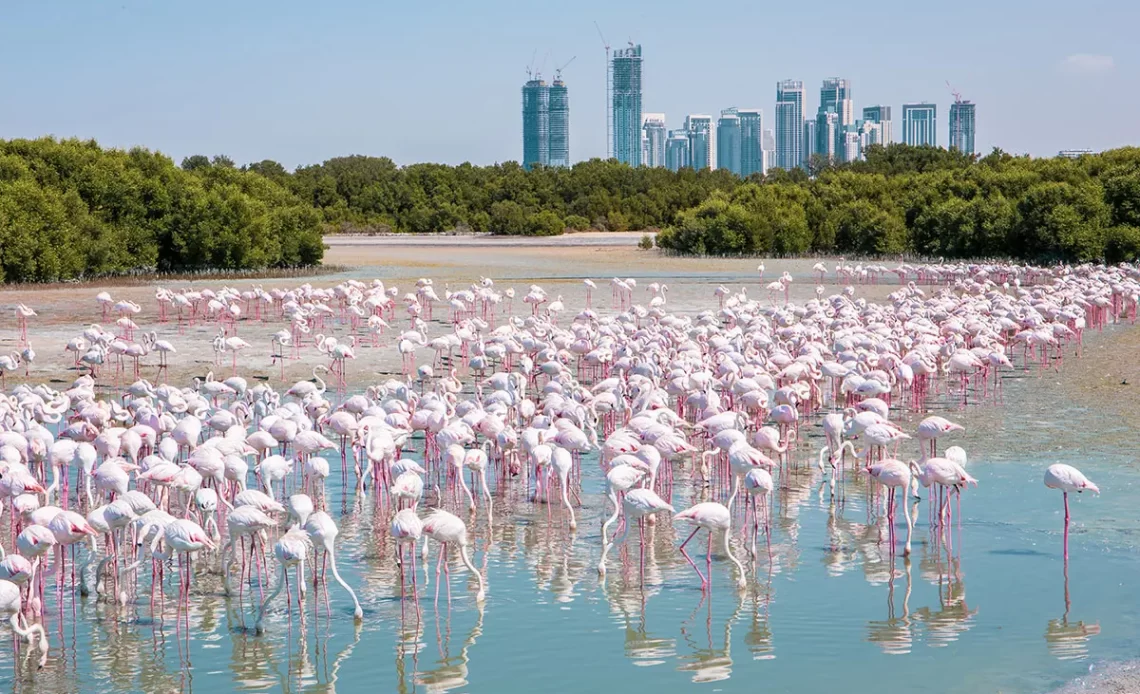
If you’re enthusiastic to explore birdwatching beyond typical destinations, Dubai offers a surprising and vibrant mix of migratory birds. Positioned along vital flyways, its wetlands and deserts become bustling rest stops for species journeying thousands of miles. You’ll find flamingos wading elegantly and cormorants diving skillfully amid urban backdrops. Understanding where and when to observe these fascinating visitors can transform your experience—and the next hotspot might just reveal a rare sight you won’t want to miss.
Dubai as a Migratory Highway
Dubai’s strategic location at the intersection of Europe, Asia, and Africa positions it as a crucial migratory highway for millions of birds annually. The city serves as a vital stopover along the Rift Valley/Black Sea flyway, where various bird species pause to rest and refuel in Dubai’s diverse habitats. These include coastal mudflats known as sabkha, lush mangrove forests, and the human-made wetlands of Al Qudra, each providing essential food and shelter.
Residents interested in birdwatching should plan their visits during the spring and autumn migration seasons, when a multitude of species can be observed embarking on their extensive journeys between breeding and wintering grounds. For instance, the Dubai Desert Conservation Reserve and Ras Al Khor Wildlife Sanctuary offer excellent vantage points for spotting migratory birds. Even during the winter months, many species choose to stay in Dubai to escape harsher climates, making it a year-round destination for bird enthusiasts.
Understanding Dubai’s unique ecological significance enhances appreciation for its role as a vibrant migratory hotspot. The collaboration between local authorities, such as the Dubai Environment and Protected Areas Authority (EPAA), and conservation efforts in areas like the Dubai Wetlands demonstrates the city’s commitment to preserving its diverse wildlife. For more detailed insights, residents can refer to the EPAA’s resources on local wildlife and conservation practices, ensuring they stay informed on how to engage responsibly with this natural heritage.
Pre-Visit Essentials
Ensure you have essential gear like quality binoculars and a field guide, and consider the best times for birdwatching in Dubai.
Key Birdwatching Gear
A well-selected set of birdwatching gear can elevate your experience in Dubai, transforming it from enjoyable to remarkable. The city’s varied ecosystems require equipment that enhances your ability to spot, identify, and safely engage with the natural world.
Step 1: Choose Quality Binoculars
Invest in a robust pair of binoculars, ideally with 8×42 or 10×42 magnification. These specifications provide sharp visuals, essential for observing the diverse bird species found in Dubai’s wetlands, such as the Ras Al Khor Wildlife Sanctuary, a designated Ramsar site known for its migratory birds.
Step 2: Consider a Spotting Scope
For distant bird observation, particularly in locations like Al Qudra Lakes, a spotting scope mounted on a tripod is invaluable. This setup allows for the meticulous study of waders and other species without causing disturbance.
Step 3: Utilize Field Guides and Mobile Apps
A comprehensive field guide specific to Middle Eastern birds, such as “Birds of the Middle East,” is crucial for accurate identification. Additionally, mobile applications like “Merlin Bird ID” offer interactive tools for quick species identification, enhancing your birdwatching experience on-the-go.
Step 4: Prepare for Dubai’s Climate
Given Dubai’s intense sun, it is vital to equip yourself with sun protection. A wide-brimmed hat, high-SPF sunscreen, and a reusable water bottle are essential items to ensure your comfort and safety during outings.
Essential Gear Checklist:
- High-quality binoculars tailored for detailed viewing.
- A spotting scope with a tripod for distant bird watching.
- An extensive bird field guide focused on the Middle East.
- A mobile app for interactive bird identification.
- Sun protection essentials: hat, sunscreen, and water bottle.
Best Seasons for Birdwatching
When planning a birdwatching trip in Dubai, understanding the seasonal migration patterns is crucial for maximizing your experience. The optimal times for birdwatching are during the peak migration seasons: spring (March to May) and autumn (September to November). These months are characterized by an impressive array of migratory birds traversing the region, with notable species including elegant waders and powerful raptors. For residents considering a visit to popular birdwatching locations such as Ras Al Khor Wildlife Sanctuary, these seasons offer the best opportunities to observe diverse avian life.
Additionally, winter (December to February) presents favorable conditions for birdwatching, as many birds seek refuge in Dubai’s milder climate, making this period another excellent time to explore local habitats. However, it is advisable to avoid the summer months (June to August) due to the extreme heat, which significantly decreases bird activity and diversity. Birdwatchers should strategically plan their outings during the cooler mornings and late afternoons within these prime seasons to enhance their chances of witnessing fascinating bird behaviors and vibrant plumage, all while enjoying a comfortable experience.
For those looking to enhance their birdwatching knowledge, local organizations such as the Dubai Birdwatching Club provide resources and community support. Engaging with these entities can offer insights into specific bird species and their migratory patterns, further enriching your birdwatching adventure in Dubai.
Top Birdwatching Hotspots in Dubai
Discover Dubai’s diverse birdwatching spots, where each location offers a unique experience with both local and migratory species throughout the emirate.
Ras Al Khor Wildlife Sanctuary
Ras Al Khor Wildlife Sanctuary, located just minutes from the bustling downtown Dubai, offers a vital urban oasis for over 200 bird species, including a significant population of Greater Flamingos, which can be observed year-round in their striking pink plumage. This wetland ecosystem not only provides a refuge for migratory birds but also serves as a critical educational resource for residents and visitors interested in wildlife conservation.
When visiting Ras Al Khor, residents can take advantage of two dedicated bird hides: the Flamingo Hide and the Mangrove Hide. These facilities allow for close observation of the sanctuary’s diverse habitats, including mudflats, mangroves, and lagoons—each supporting different bird species. Notably, birdwatchers can spot Greater Spotted Eagles during the winter months and Western Reef Herons throughout the year, making it a prime location for both casual observers and avid birdwatchers.
To ensure the preservation of this essential ecological site, visitors must adhere to established guidelines. This includes remaining on designated paths to minimize disruption to wildlife, which is particularly crucial during peak migratory seasons. The sanctuary serves as a reminder of Dubai’s commitment to environmental sustainability amidst rapid urban development.
For those looking to enhance their understanding of the local ecosystem, the sanctuary frequently collaborates with educational organizations to offer workshops and guided tours. Engaging with these resources can deepen one’s appreciation of Dubai’s rich biodiversity and the importance of conservation efforts.
Al Qudra Lakes (in Dubai Desert Conservation Reserve)
Al Qudra Lakes, situated within the Dubai Desert Conservation Reserve, exemplifies Dubai’s commitment to environmental sustainability and recreational development. These man-made water bodies transform the arid landscape into an oasis, attracting diverse bird species and providing residents with a unique natural retreat. Accessing the lakes often requires a 4×4 vehicle, particularly if visitors aim to explore quieter areas where birdwatching opportunities peak.
For bird enthusiasts, Al Qudra Lakes serves as a prime location to observe various species in their natural habitats. The table below outlines key bird species found at the lakes, their habitat preferences, and the optimal times for viewing:
| Bird Species | Habitat Preference | Best Viewing Time |
|---|---|---|
| Greater Flamingo | Shallow freshwater lakes | Early morning |
| Cream-coloured Courser | Sandy desert edges | Late afternoon |
| Glossy Ibis | Vegetated lake margins | Mid-morning |
| Northern Shoveler | Open water bodies | Dawn and dusk |
| Hoopoe Lark | Desert plains | Sunrise and sunset |
Cycling enthusiasts can take advantage of the nearby Al Qudra cycling track, a well-maintained route that weaves through the desert landscape, offering both a recreational outlet and an opportunity to engage with nature. The track is popular among residents and tourists alike, making it an ideal choice for both leisurely rides and more serious cycling.
When planning a visit to Al Qudra Lakes, it is advisable to check the current weather conditions and prepare accordingly, as the desert climate can be extreme. Additionally, bringing binoculars will enhance the birdwatching experience, allowing for detailed observation of the diverse avian population that calls this oasis home.
Mangrove Wetlands (e.g., Jebel Ali, Khor Kalba)
While Dubai is renowned for its desert landscapes, the city’s mangrove wetlands, particularly at Jebel Ali and Khor Kalba, provide an essential wildlife refuge that merits exploration. These areas are integral to Dubai’s biodiversity, serving as vital stopovers for migratory birds, including songbirds and waterbirds. The mangrove ecosystems here, characterized by their dense growth and sheltered waterways, not only offer nesting sites but also a rich food source, including insects and small fish.
For residents and visitors interested in birdwatching, engaging with these ecosystems can be both rewarding and educational. Here are essential activities to consider:
1. Guided Kayak Tours: Participating in organized kayak tours through the mangroves is a practical way to observe wildlife up close while minimizing disturbance to the habitat. Look for local providers such as Khor Kalba Eco-Tourism for guided experiences.
2. Boardwalk Strolls: The Khor Kalba boardwalk offers a leisurely pathway to enjoy the scenery and observe birdlife. This facility is designed to enhance accessibility while preserving the natural environment.
3. Birdwatching Highlights:
- Spot the endemic White-collared Kingfisher, which is frequently seen around Khor Kalba due to the area’s unique habitat.
- Observe herons and Indian Pond Herons as they hunt for food in the shallow waters, demonstrating the area’s role as a feeding ground.
- Look for migratory passerines that utilize the wetlands as resting points during their long migrations.
4. Environmental Stewardship: Visitors should respect these carbon-rich ecosystems by adhering to designated paths and minimizing noise, ensuring that the delicate balance of the mangrove habitat remains undisturbed.
Safa Park / Mushrif Park
Dubai’s Safa Park and Mushrif Park are premier urban birdwatching destinations that cater to both newcomers and established residents seeking to engage with local wildlife. These parks serve as vital ecosystems within the city, attracting a diverse array of avian species, including common urban birds like the White-eared Bulbul, as well as migratory species such as warblers, flycatchers, shrikes, and wheatears.
Location-Specific Advice: Safa Park, located adjacent to the Dubai Water Canal, and Mushrif Park, situated in the Mirdif area, both provide accessible green spaces for birdwatching. Their shaded areas, small lakes, and tranquil walking trails create conducive environments for observing birds in their natural habitat, making them ideal locations for residents looking to enjoy nature without leaving the urban landscape.
Facility Overview: Both parks are equipped with essential amenities, including cafes and restrooms, ensuring a comfortable experience for visitors. For those planning a visit, it is advisable to check the Dubai Parks and Resorts website for any updates on park hours and entry fees, as these may vary seasonally.
Seasonal Birdwatching Tips: The best times for birdwatching at these parks coincide with migration seasons, typically occurring in spring and autumn. Residents are encouraged to bring binoculars and field guides specific to the region to enhance their birdwatching experience, allowing for accurate identification of the diverse species present.
Notable Migratory & Resident Species to Spot
Dubai’s diverse avifauna presents a compelling opportunity for birdwatchers seeking to explore the emirate’s rich ecological tapestry. Whether observing from the wetlands of Ras Al Khor or the tranquil parks in Al Qudra, residents and visitors alike can encounter both migratory species and year-round residents. Key species to be aware of include:
- Greater Flamingo: These striking pink birds are a hallmark of Dubai’s wetlands, particularly at Ras Al Khor Wildlife Sanctuary, which is managed by the Dubai Environment Department. Birdwatchers can observe their unique feeding behaviors in the mudflats and lagoons.
- Socotra Cormorant: This seabird, known for its sociable nature, often gathers in large roosts along the coastline. Birdwatchers can find them near the Jebel Ali port area, where they rely on the rich marine biodiversity.
- Western Reef Heron: Recognizable by its stealthy hunting style, the Western Reef Heron frequents the shallow waters of Dubai’s coastline. They are often spotted at the Dubai Marina area, where the blend of natural habitats and urban landscapes provides ample foraging opportunities.
- Steppe Eagle: During the winter months, this raptor can be seen perching in the wetlands, particularly around Dubai Sports City. Its presence adds a dramatic flair to the avian population, showcasing Dubai’s role as a critical stopover for migratory birds.
- Osprey: Known for its exceptional fishing skills, the Osprey can be observed year-round near various water bodies, including the Dubai Creek and Al Qudra Lakes. This species is protected under UAE law, emphasizing the importance of conservation efforts in the region.
Each of these species not only enriches Dubai’s biodiversity but also contributes to the overarching narrative of migration and environmental adaptation, making birdwatching in the emirate a rewarding and educational experience. For those interested in deeper insights or guided tours, local organizations such as the Dubai Birdwatching Club offer resources and events tailored to both novice and experienced birdwatchers.
Desert Specialists
When exploring Dubai’s expansive desert landscapes, residents and visitors alike can discover a unique array of avian species, including the Hoopoe Lark and Cream-coloured Courser, both of which are exemplary desert specialists. These birds have evolved remarkable adaptations to survive the extreme heat and limited water availability characteristic of the region. The Hoopoe Lark, known for its striking aerial displays and distinctive crest, is a captivating sight, while the Cream-coloured Courser, with its long legs and swift running abilities, adeptly chases insects across the sandy terrain.
To successfully observe these resilient species, one should target specific locations known for attracting wildlife. Areas such as Al Qudra Lakes, situated on the outskirts of the city, serve as an ideal habitat due to their water resources, which draw various bird species, including the aforementioned desert specialists. Birdwatchers are encouraged to explore the desert’s edges during the cooler morning and evening hours when these birds are most active.
For those interested in enhancing their nature experiences, understanding the behaviors of these desert birds can provide insights into the evolutionary adaptations that enable them to thrive in challenging environments. Engaging with local wildlife organizations or participating in guided birdwatching tours can further enrich this experience, offering practical knowledge about the region’s ecology and conservation efforts.
Local Birding Groups & Tours
Engaging with local birding groups and guided tours in Dubai can significantly elevate your birdwatching experience, shifting it from mere observation to an enriching educational journey. These organizations, such as the Dubai Birdwatching Group and the Emirates Birdwatching Club, connect enthusiasts with experienced ornithologists who possess in-depth knowledge of Dubai’s diverse ecosystems, such as the Ras Al Khor Wildlife Sanctuary and Al Marmoom Desert Conservation Reserve.
Participating in guided birding tours allows access to exclusive areas often restricted to the public, increasing the likelihood of observing rare migratory species and local desert specialists. These tours provide invaluable insights into ethical wildlife observation and conservation practices, aligning with the efforts of local authorities like the Dubai Environment Department. By joining these groups, individuals not only enhance their birdwatching skills but also contribute to citizen science initiatives that monitor and track bird populations in Dubai.
- Expert-led walks offer a detailed look at bird behaviors, facilitated by local experts familiar with sites like the Dubai Creek and Al Qudra Lakes.
- Access to protected sites, such as the Dubai Desert Conservation Reserve, is a unique advantage that solo observers may not experience.
- Networking opportunities abound with fellow bird enthusiasts, fostering a community that shares knowledge and resources.
- Seasonal tours are strategically timed to coincide with peak migratory events, providing optimal viewing conditions.
- Participation in bird counts and ongoing research projects further connects enthusiasts to the broader conservation efforts in Dubai.
Engaging with these local birding communities not only fosters a deeper appreciation of Dubai’s avian diversity but also promotes sustainable practices crucial for the preservation of the region’s unique wildlife.